The Expanding Universe
Section 5 of 6
Looking Far Away Means Looking Back
Part 4: Looking Far Away Means Looking Back
Light travels at a finite speed. That simple fact turns distance into time. When we observe a nearby object, we see it as it was a short time ago. When we observe a distant galaxy, we see it as it was millions or billions of years ago.
Deep fields make this idea visible. They contain galaxies at many distances, which means they contain galaxies at many
Lookback time
The time light has spent traveling from an object to us, so distant objects are seen as they were in the past. A deep field mixes many lookback times in one frame.
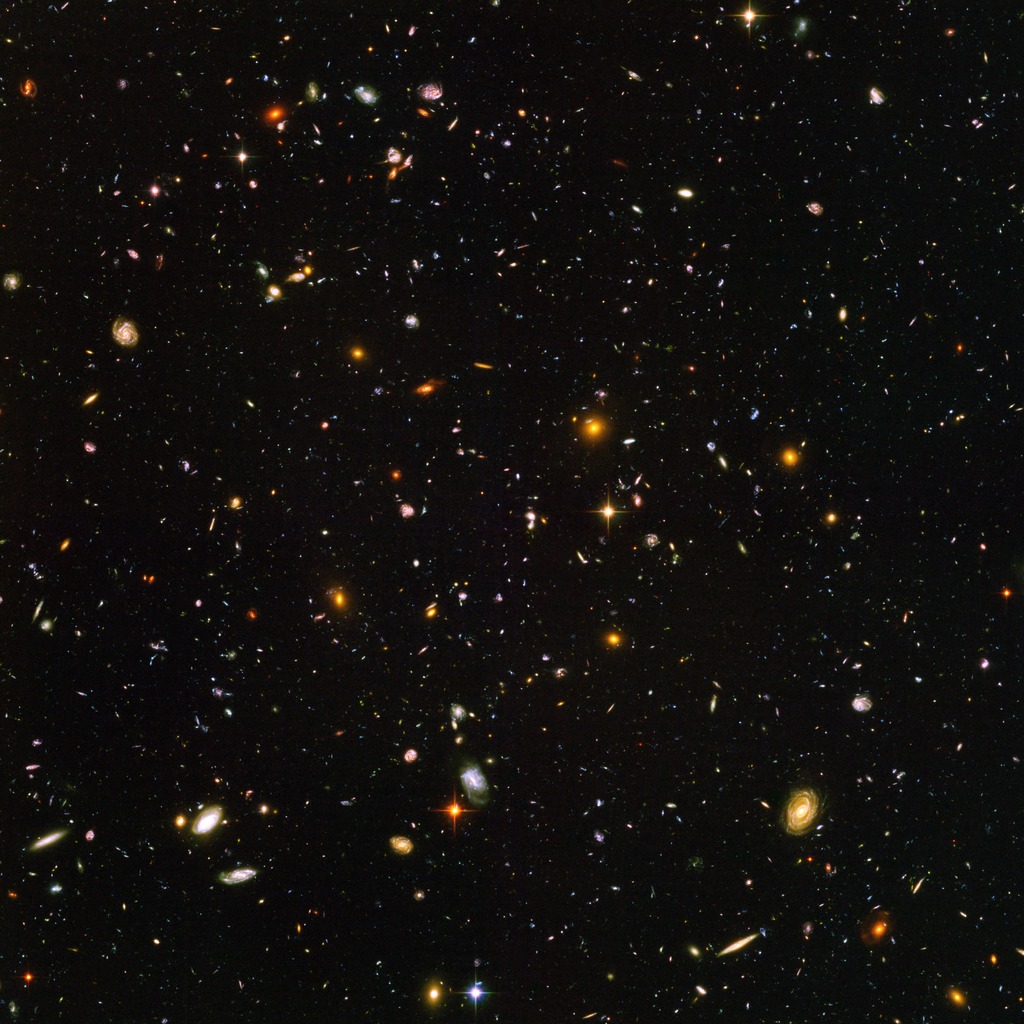
This is one of the most important habits in cosmology: do not read a deep field as a flat photograph. Read it as a time archive. A small, faint, red galaxy in the background may not be a small faint version of a nearby galaxy. It may be a distant galaxy observed when the universe was much younger, with its light stretched and dimmed by cosmic expansion.
JWST pushes this logic closer to the first generations of galaxies. Very high-redshift objects test how quickly stars, gas, dust, and black holes assembled after the Big Bang.
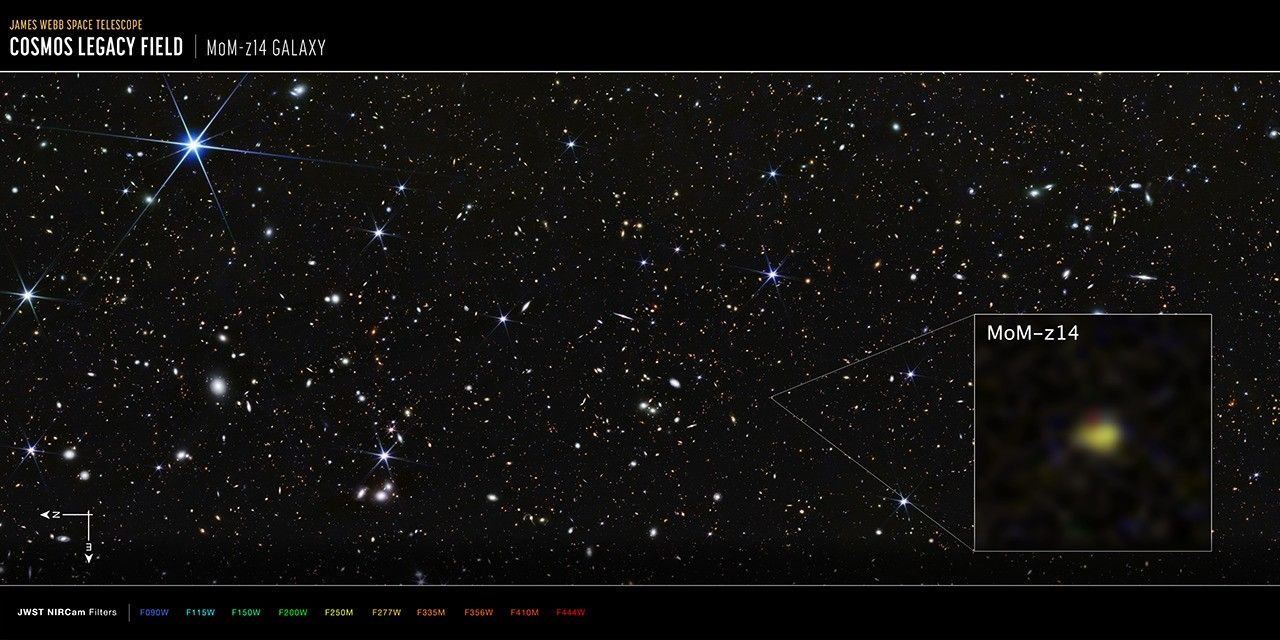
The frontier is exciting because it is a stress test. If galaxies appear earlier, brighter, or more massive than expected, then models of early galaxy formation must explain how gas cooled, formed stars, and assembled structure quickly enough. As always, the observation is not the final answer. The observation is the constraint that the model must survive.
Quick check
Why should we read a deep field as a time archive rather than a flat collection of galaxies?
Because light travel time matters. More distant galaxies are seen as they were farther in the past, so a deep field mixes nearby recent galaxies with distant galaxies observed when the universe was younger.