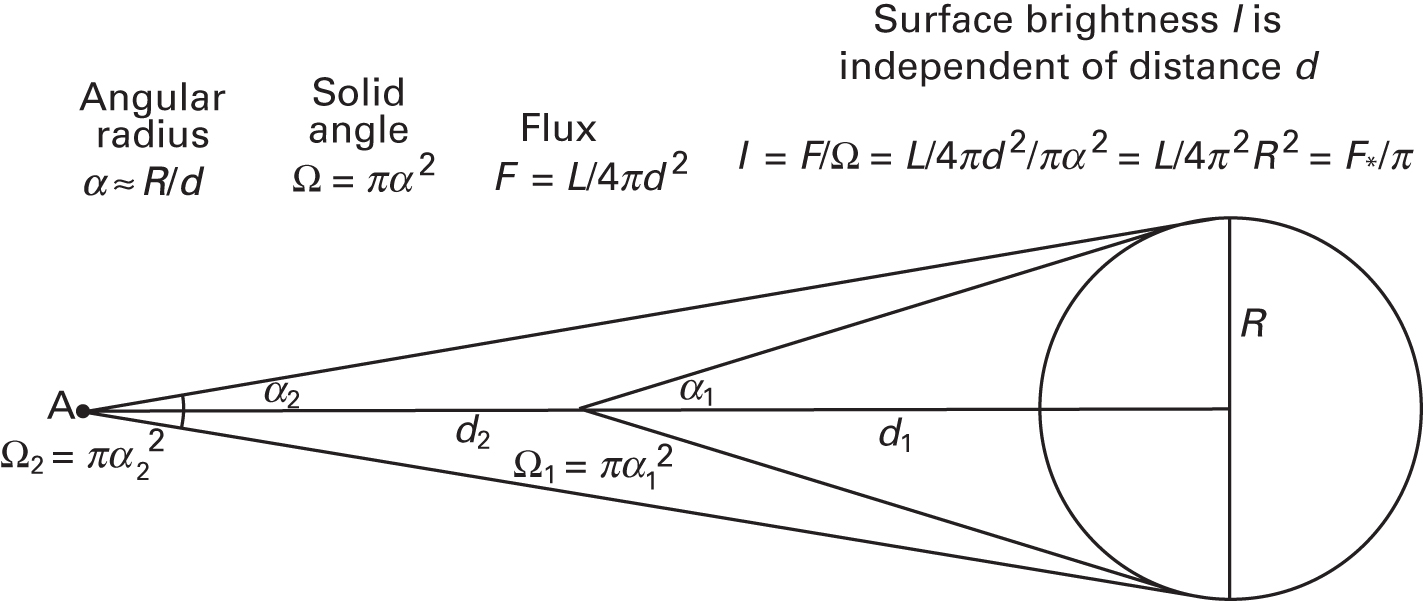
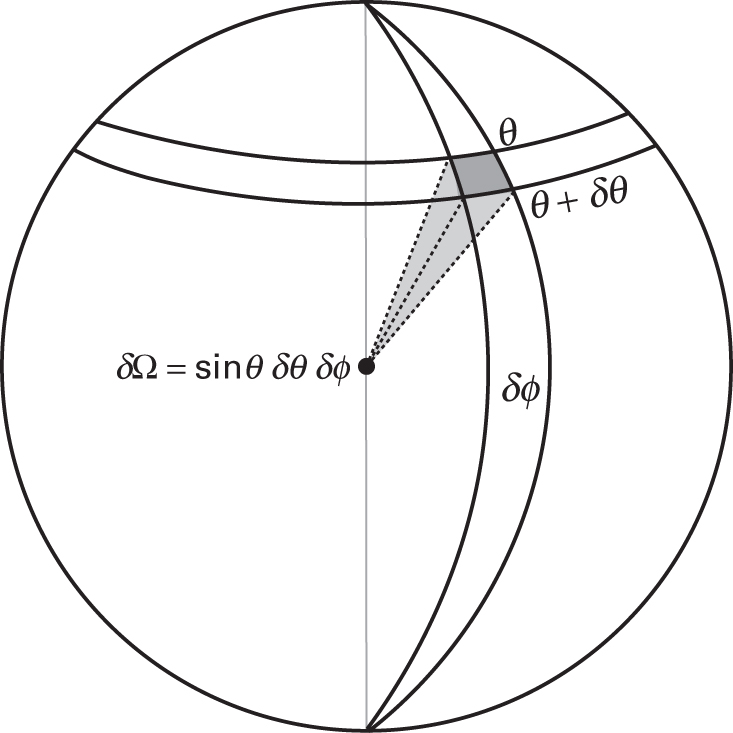
Surface Flux & Colors of Stars
Section 2 of 8
Surface Flux and Received Flux
Part 2: Surface Flux vs. Received Flux
In Lecture 1 you learned that the flux received at Earth falls off with distance.
This
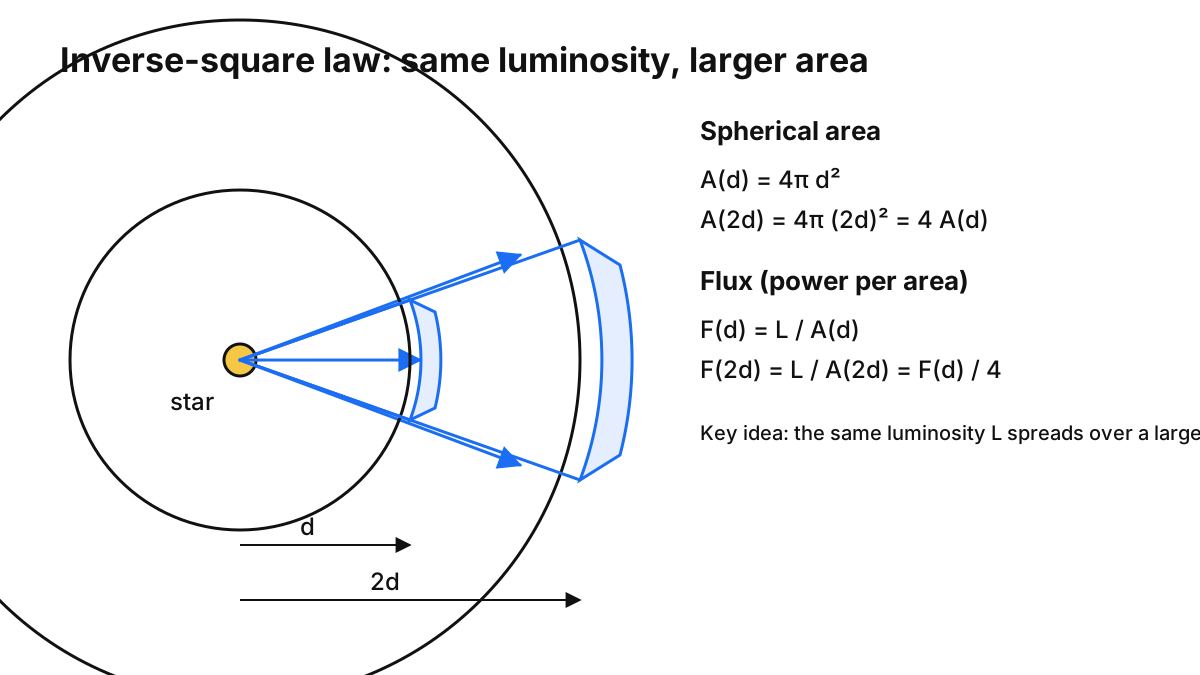
Received flux
The power per unit area an observer measures at distance , . Distance-dependent — it falls as .
Now consider a different quantity: if you could stand on the star’s surface, how much power per unit area would you receive? That is the surface flux:
Surface flux
The power per unit area radiated at the star’s own surface, . It depends only on the star’s intrinsic properties ( and ), not on the observer’s distance.
| Quantity | Equation | What it measures | Depends on |
|---|---|---|---|
| Received flux () | Brightness we measure | Star’s distance; our location | |
| Surface flux () | Radiation at the star’s surface | Star’s luminosity and radius only |
NoteSymbol legend — quantities used in this reading
| Symbol | Name | Units (CGS) |
|---|---|---|
| Luminosity | erg/s | |
| Received flux | erg s⁻¹ cm⁻² | |
| Surface flux | erg s⁻¹ cm⁻² | |
| Stellar radius | cm (or ) | |
| Distance | cm (or pc) | |
| Effective temperature | K | |
| Stefan-Boltzmann constant | erg cm⁻² s⁻¹ K⁻⁴ | |
| Wien’s constant | cm·K | |
| Peak wavelength | nm or cm |
Quick check
- If a star’s distance doubles, received flux does what?
- If a star’s radius doubles (with fixed), surface flux does what?
- Two stars have the same received flux at Earth. Must they have the same surface flux?
- Quarters — received flux scales as .
- Quarters — surface flux scales as .
- No. Received flux depends on both luminosity and distance; two stars with equal received flux can have different distances and luminosities, hence different surface fluxes.