Surface Flux & Colors of Stars
Section 8 of 8
Assumptions and Synthesis
Part 8: Assumptions and Limitations
The Stefan-Boltzmann law assumes:
- Spherical symmetry — uniform radiation from a sphere of radius . Reality: rapid rotators are oblate, binaries tidally distorted. Small error for most stars.
- Uniform surface temperature — Reality: gradients and starspots exist, so is an effective temperature: the blackbody temperature reproducing the total flux.
- Blackbody radiation — Reality: real spectra have absorption lines and non-thermal emission, but the overall Planck shape is a good approximation; lines are second-order.
Astronomers determine
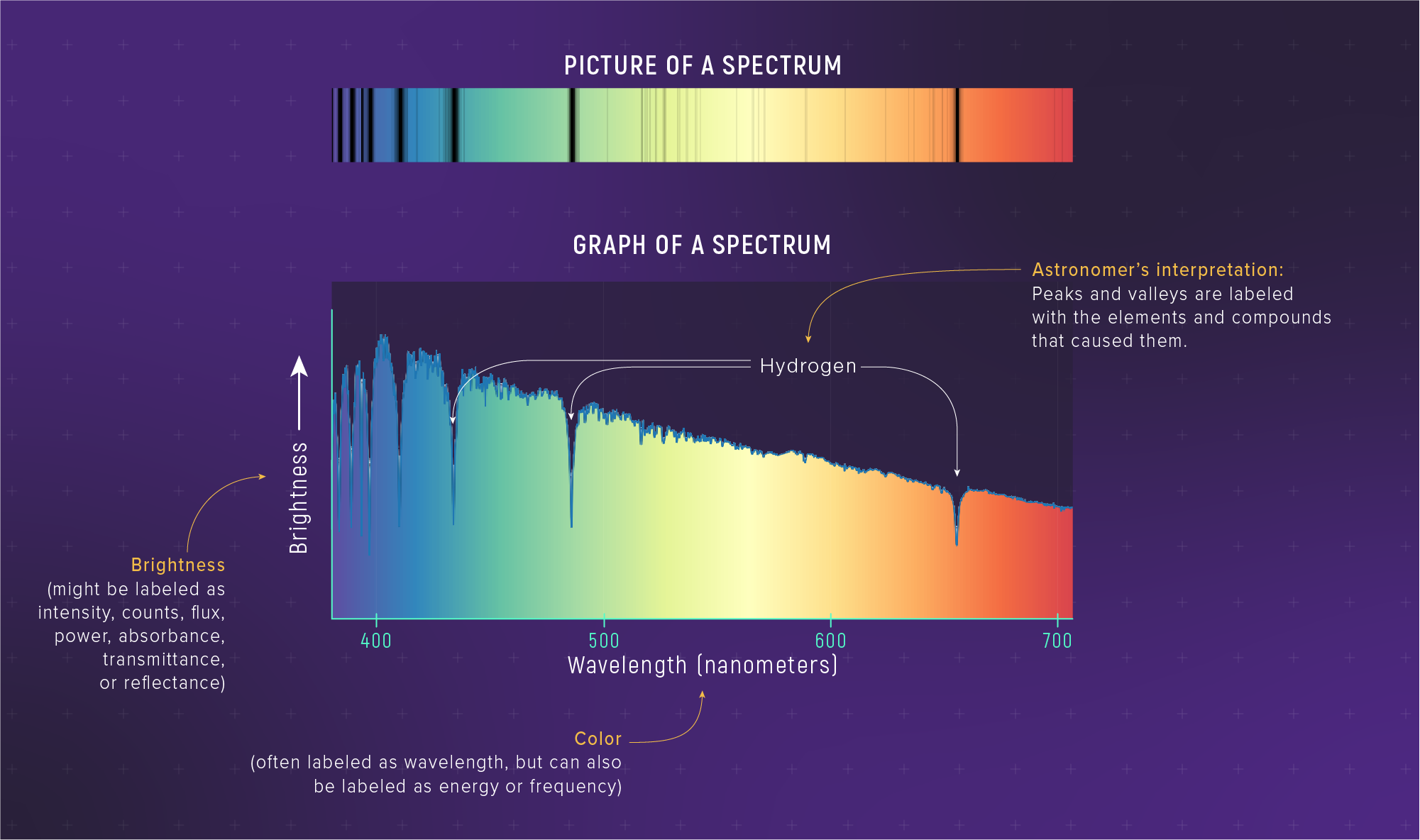
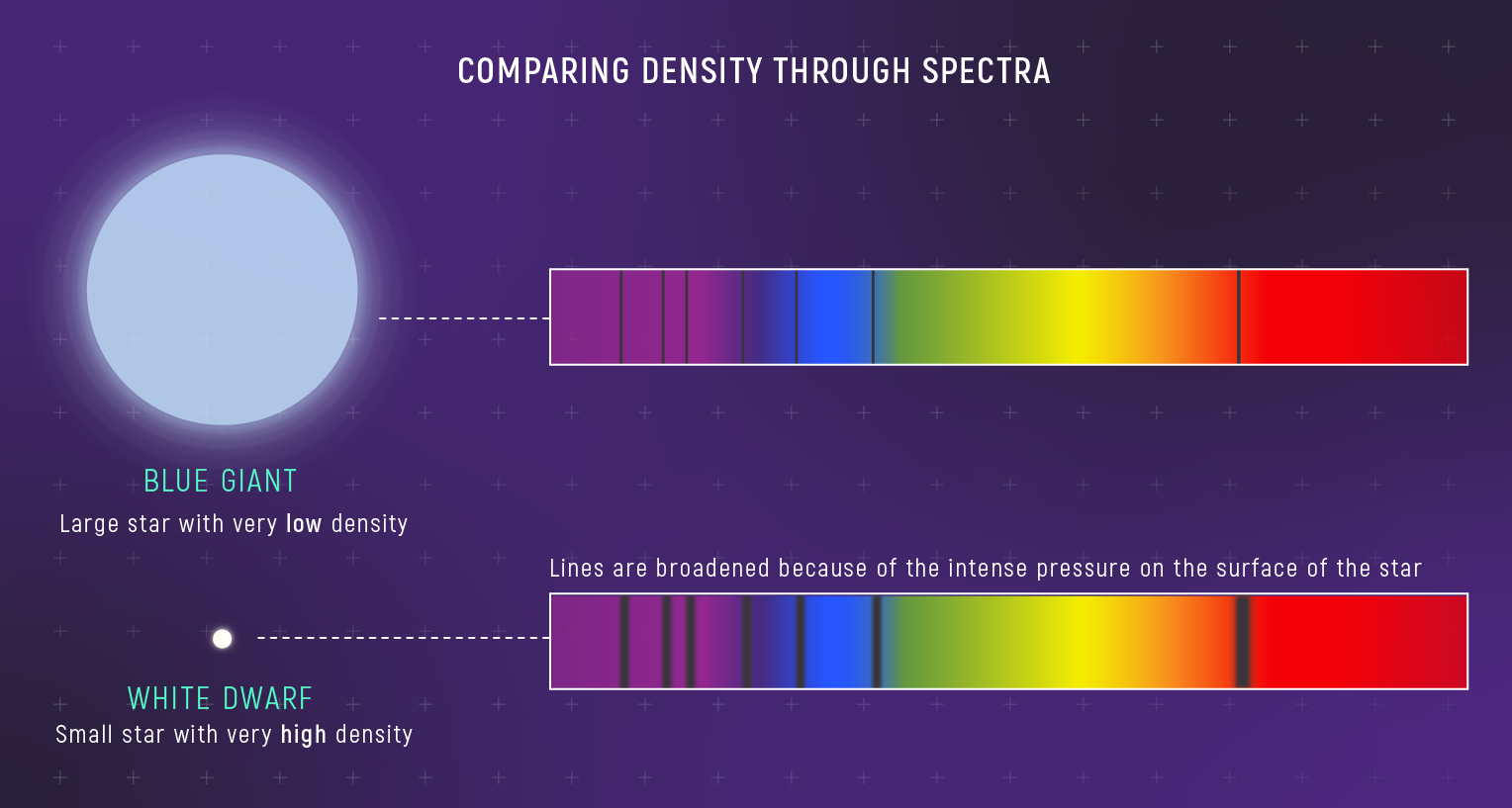
Effective temperature
The temperature a uniform blackbody would need to radiate the same total surface flux as the star, . It is the "" used throughout the Stefan-Boltzmann and Wien relations.
Summary: Observable → Model → Inference
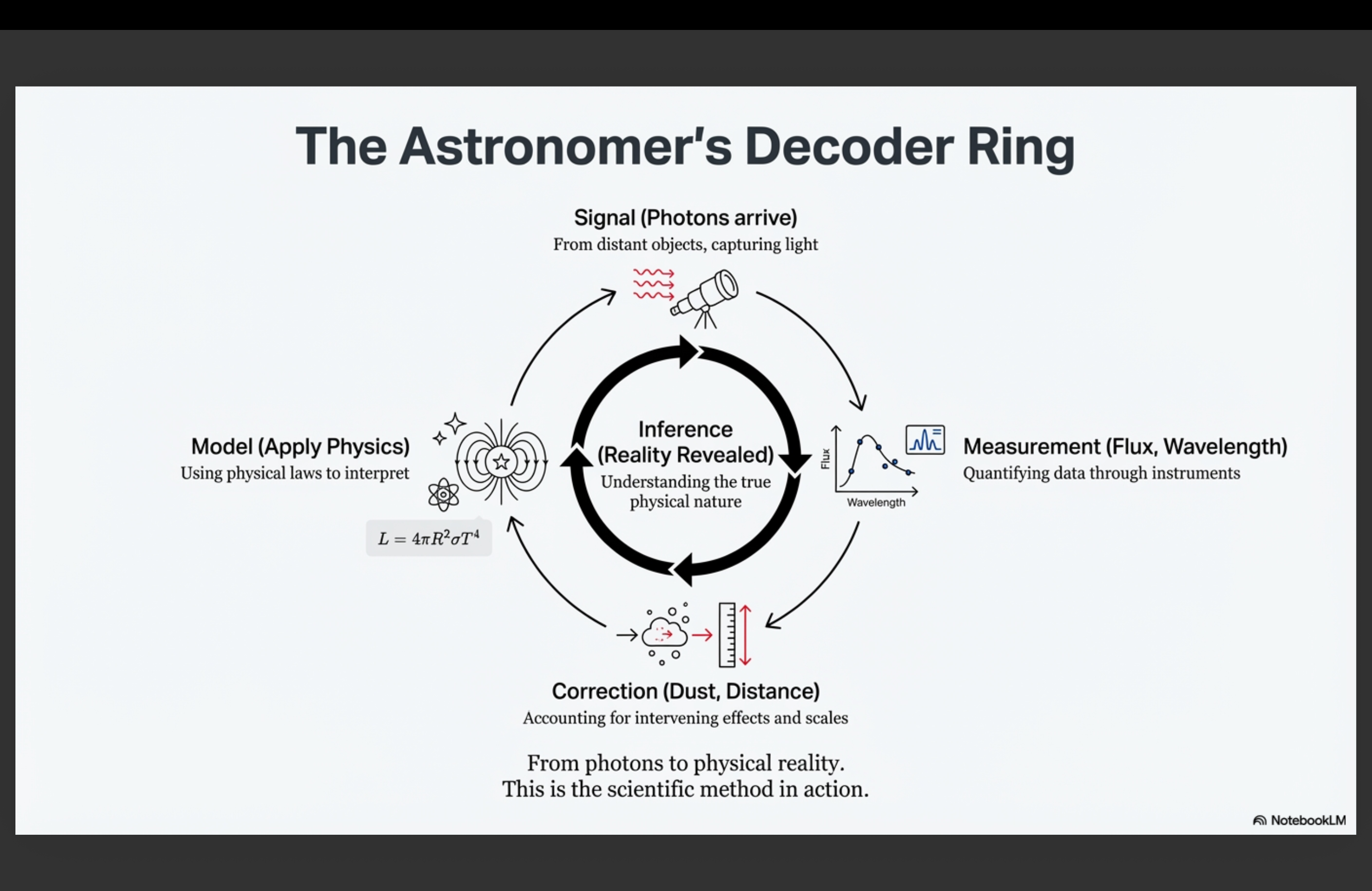
| We observe | We use | We infer |
|---|---|---|
| Received flux at distance | Luminosity | |
| Peak wavelength | Wien: | Temperature |
| Luminosity and temperature | Stefan-Boltzmann: | Radius |
Each star yields at least three fundamental properties from two measurements (brightness + color) and one distance. That is the power of multi-wavelength, multi-technique astronomy.
Glossary
- Effective temperature
The temperature a uniform blackbody would need to radiate the same total surface flux as the star, . It is the "" used throughout the Stefan-Boltzmann and Wien relations.
- Received flux
The power per unit area an observer measures at distance , . Distance-dependent — it falls as .
- Stefan-Boltzmann law
— the total power a spherical blackbody of radius and effective temperature radiates. Surface flux times area .
- Surface flux
The power per unit area radiated at the star’s own surface, . It depends only on the star’s intrinsic properties ( and ), not on the observer’s distance.
- Wien's law
with — the peak wavelength of a blackbody’s per-wavelength Planck curve is inversely proportional to temperature. Hotter is bluer.