Weighing the Invisible
Section 2 of 11
The Milky Way Is Not Alone
Part 1: The Milky Way Is Not Alone
Before we weigh a galaxy, we should place it in context. The Milky Way is one member of the
Local Group
The gravitationally bound galaxy group containing the Milky Way, Andromeda, Triangulum, and many dwarf galaxies. Because it is bound, its members’ motions are governed by local gravity rather than by cosmic expansion.
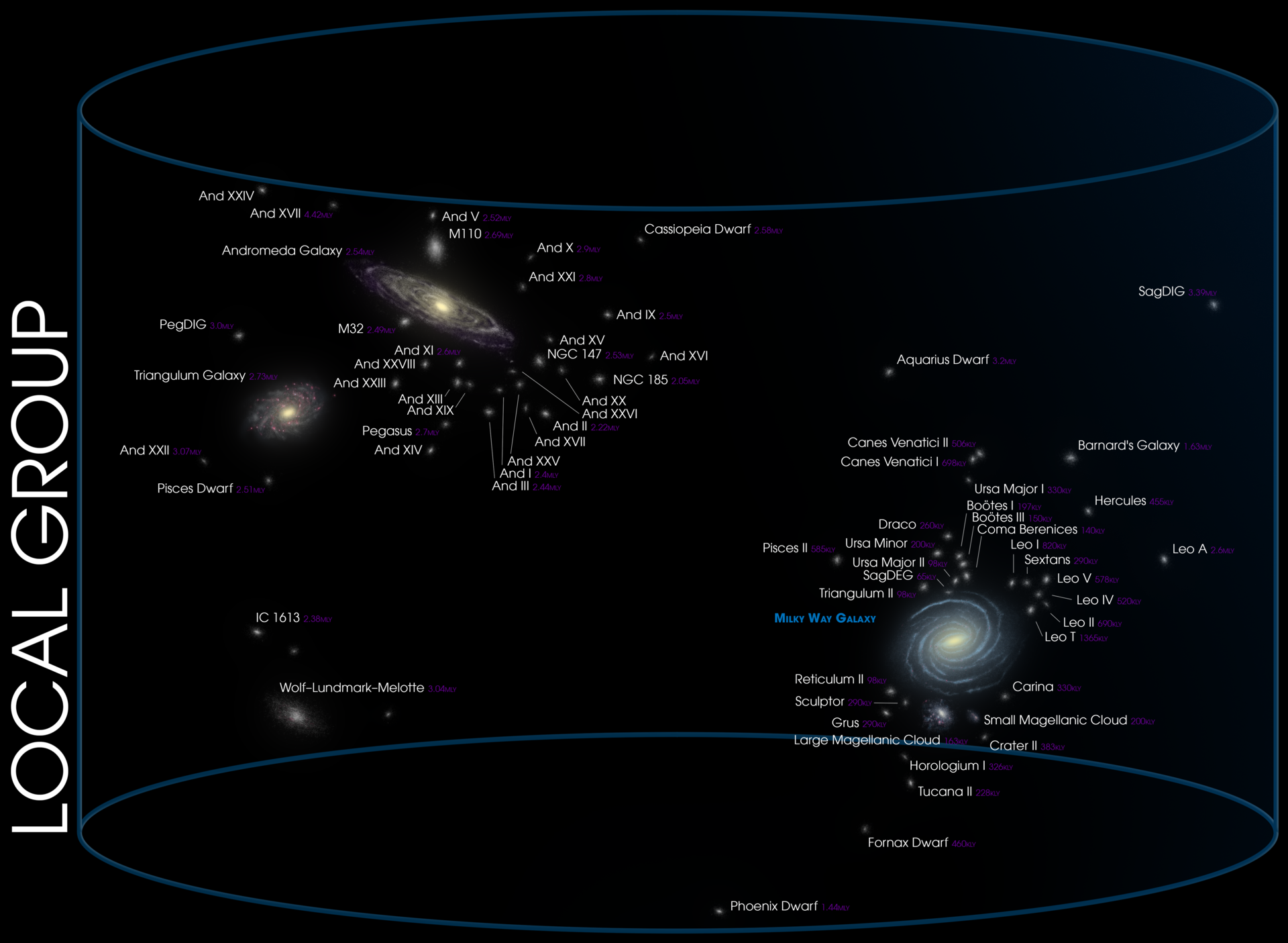
The Local Group is already a lesson in scale and hierarchy. The Milky Way and Andromeda dominate the visible stellar mass, but the group contains many smaller galaxies. Dwarf galaxies are easy to miss because they are faint, diffuse, and often low in surface brightness. Yet they are important: they trace the gravitational environment and help reveal how galaxies assemble over time.
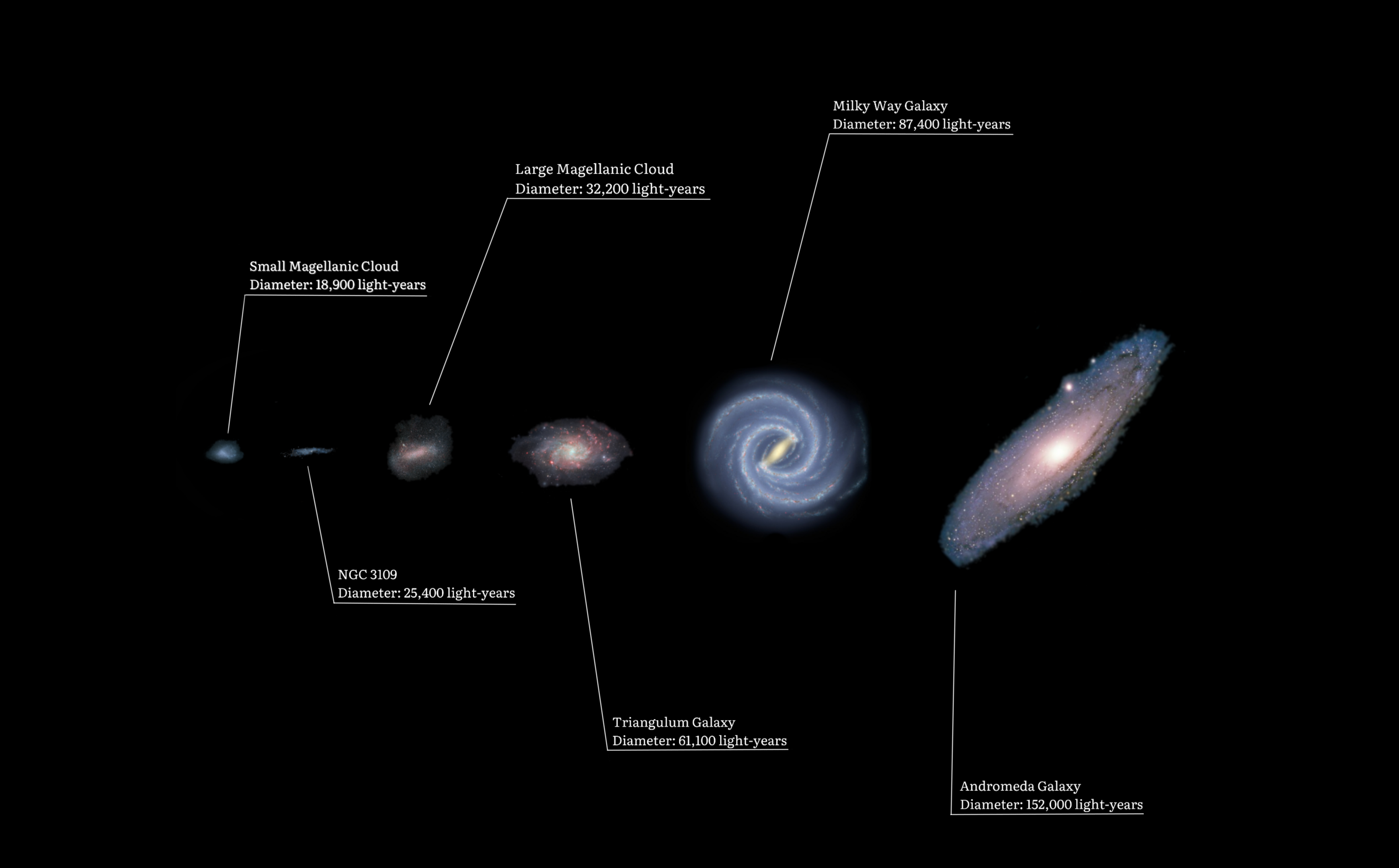
The word “group” should remind you of something from earlier in the course: when objects are gravitationally bound, their motions carry information about mass. The Local Group is not expanding with the Hubble flow in the simple way distant galaxies do. Local gravity matters more than cosmic expansion here. That distinction will become important in the cosmology reading.
Quick check
Why should we be careful about applying Hubble’s law to the Milky Way and Andromeda?
Because the Milky Way and Andromeda are in a gravitationally bound local system. Hubble expansion describes the large-scale average expansion of the universe, but nearby bound systems can have motions dominated by local gravity.