Nuclear Fusion and the Four Forces
Section 2 of 7
Which Force Matters Where
Part 1: Which Force Matters Where?
Students often memorize the names of the four forces without a clear picture of where each one matters. For stellar fusion, the cleanest map is scale-based: gravity dominates the whole star, electromagnetism dominates the approach of charged nuclei, the strong force matters only when nuclei are extremely close, and the weak force matters when one particle type must change into another.
| Physical scale or stage | Main actor | Job in this reading |
|---|---|---|
| Whole star | gravity | compresses the gas; sets the core temperature and density scale |
| Charged-particle encounter | electromagnetism | creates Coulomb repulsion between nuclei |
| Nuclear distance, | strong interaction | binds nucleons once they are close enough |
| Proton-to-neutron conversion in Step 1 | weak interaction | enables deuterium formation in the pp-chain |
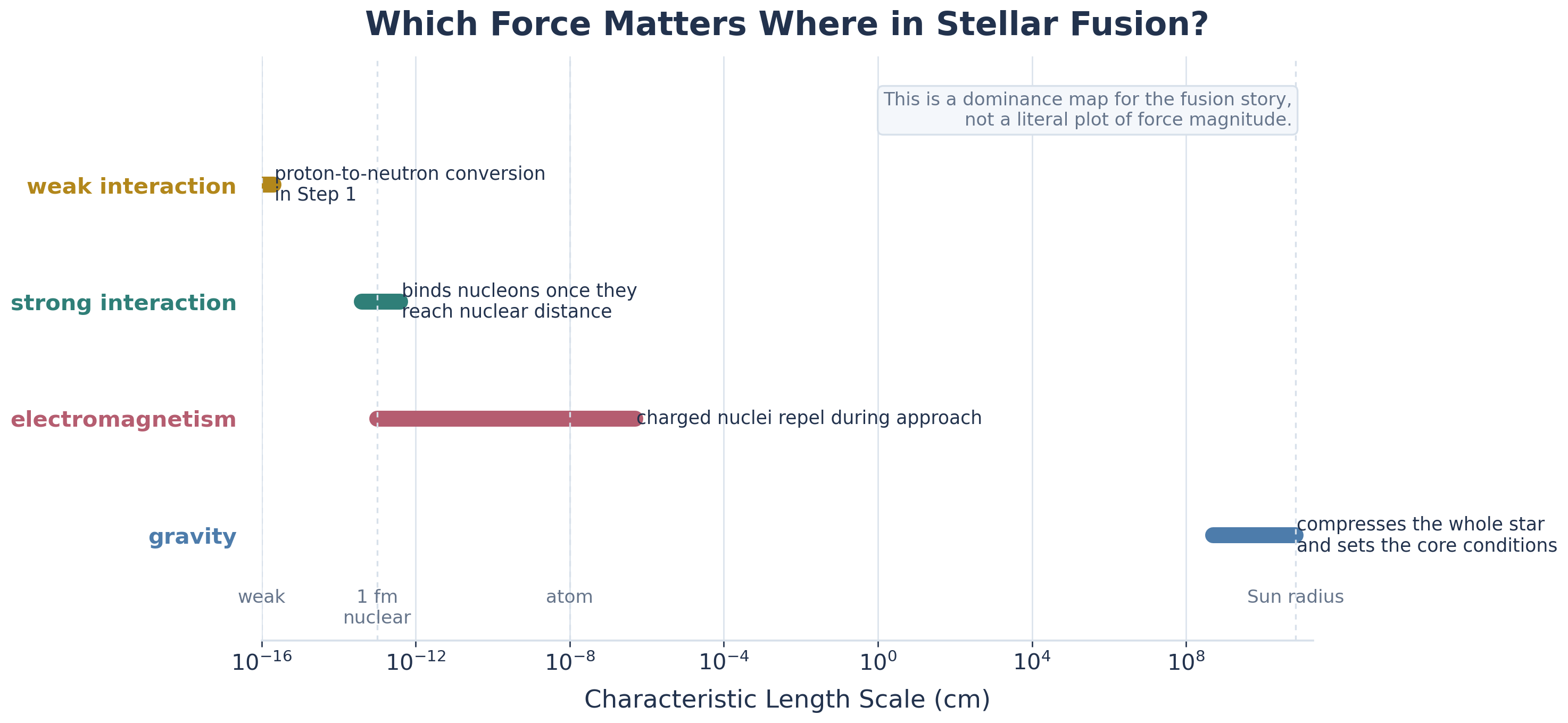
This is why gravity can be the global winner even though it is the weakest microscopic force. The
Strong interaction
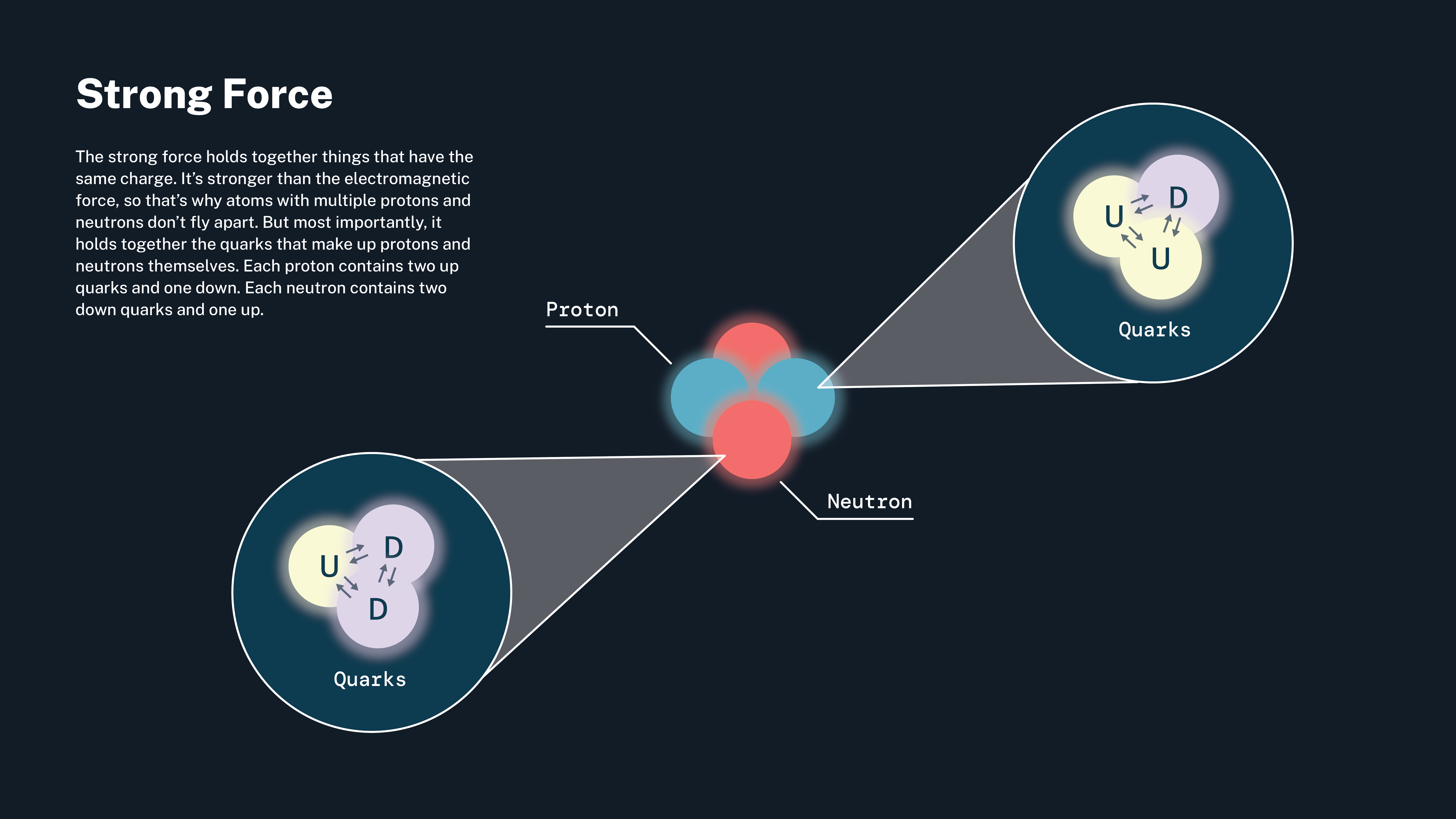
The strongest fundamental force, but effective only at nuclear distances (). It binds quarks into protons and neutrons and binds nucleons into nuclei once they are close enough to overcome Coulomb repulsion.
Weak interaction
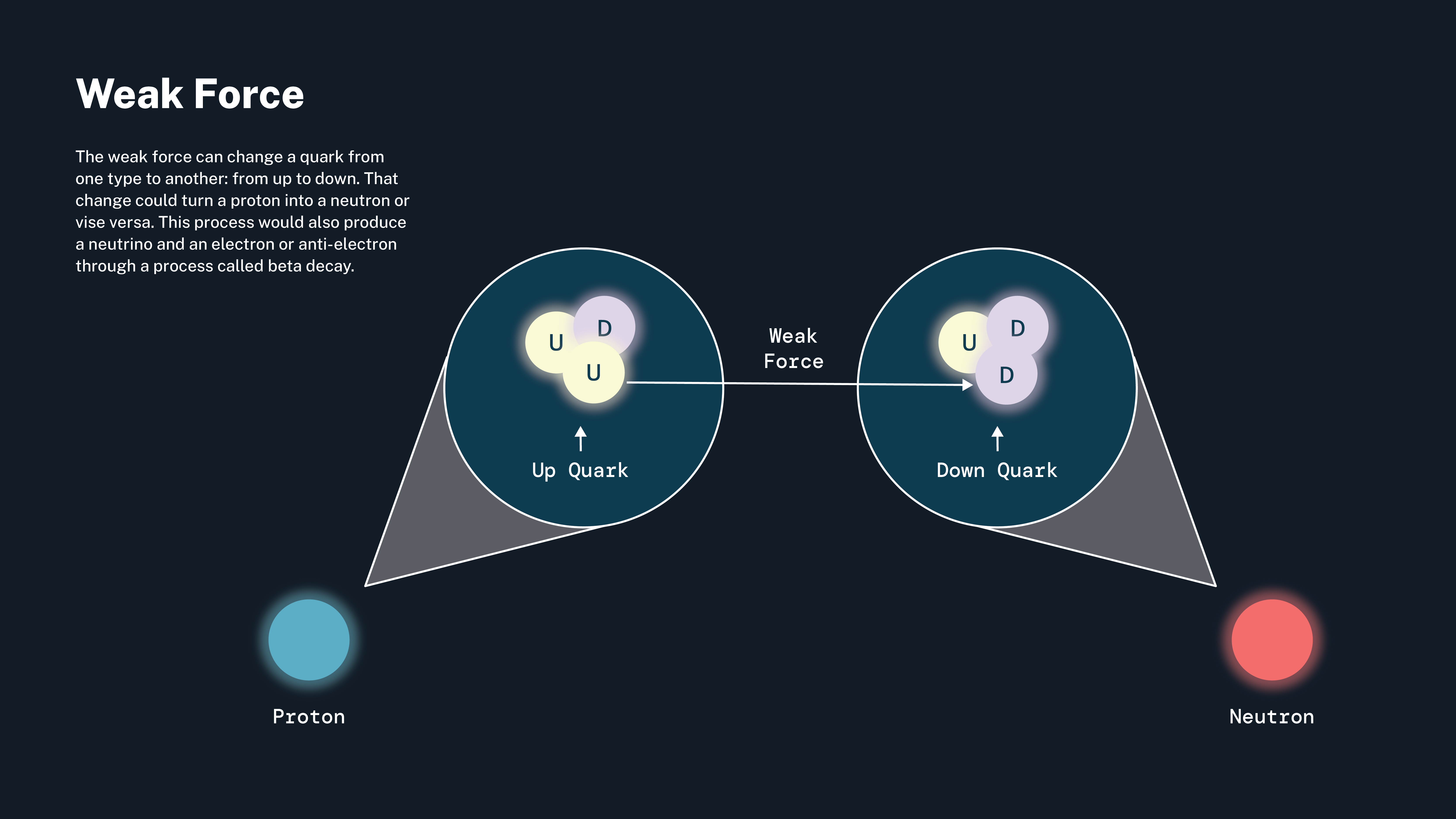
The fundamental force that converts one particle type into another — e.g. a proton into a neutron. In the pp-chain it enables the first reaction (); because weak conversions are rare, it sets the slow pace of solar hydrogen burning.
A visual tour of the four forces
The scale map above is the core reasoning tool. The four figures below give each force a visual identity — and each plays a distinct role in the one story of how a star shines.
Gravity does the compressing: it squeezes the core to the temperature that makes everything downstream possible.
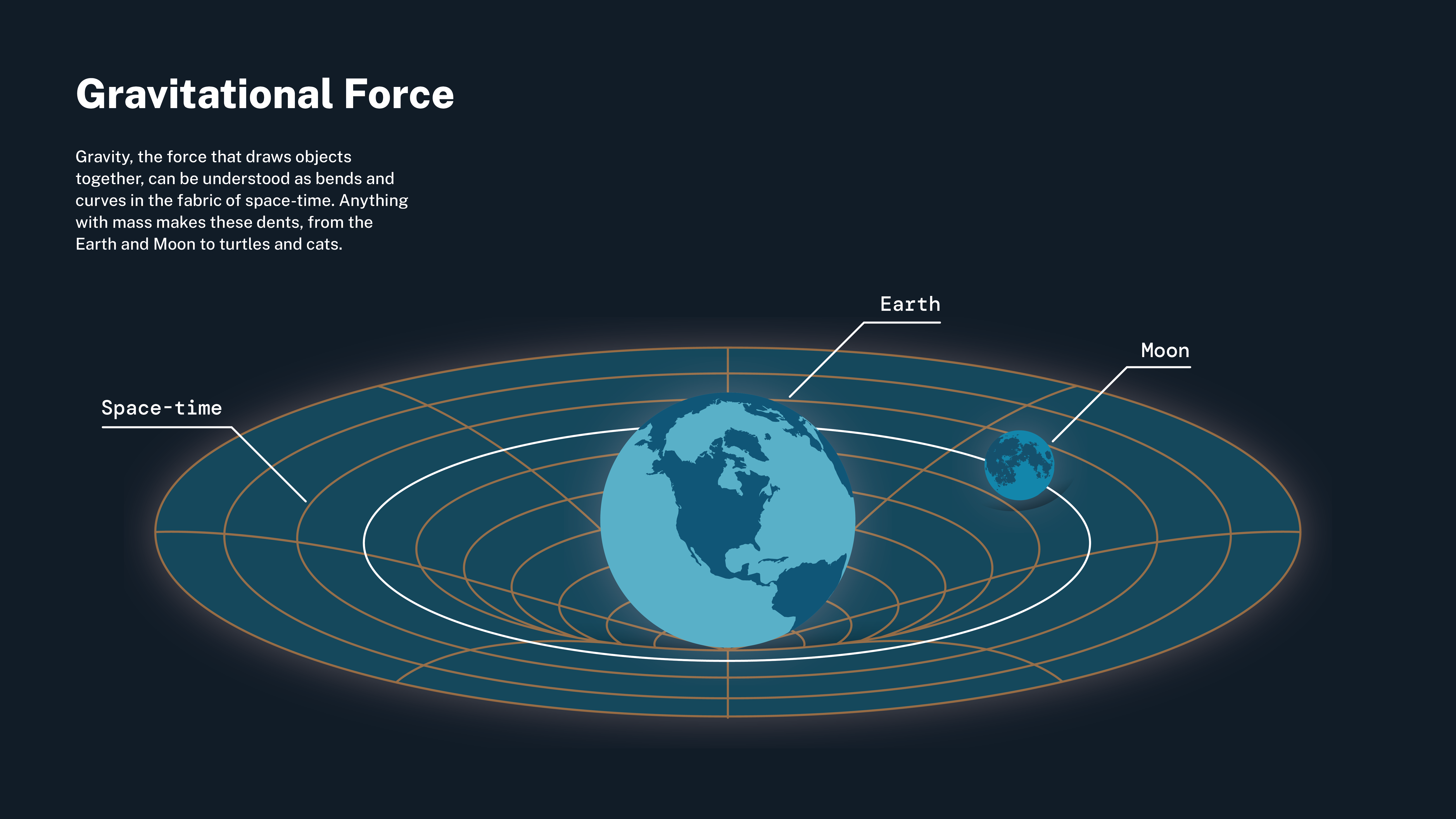
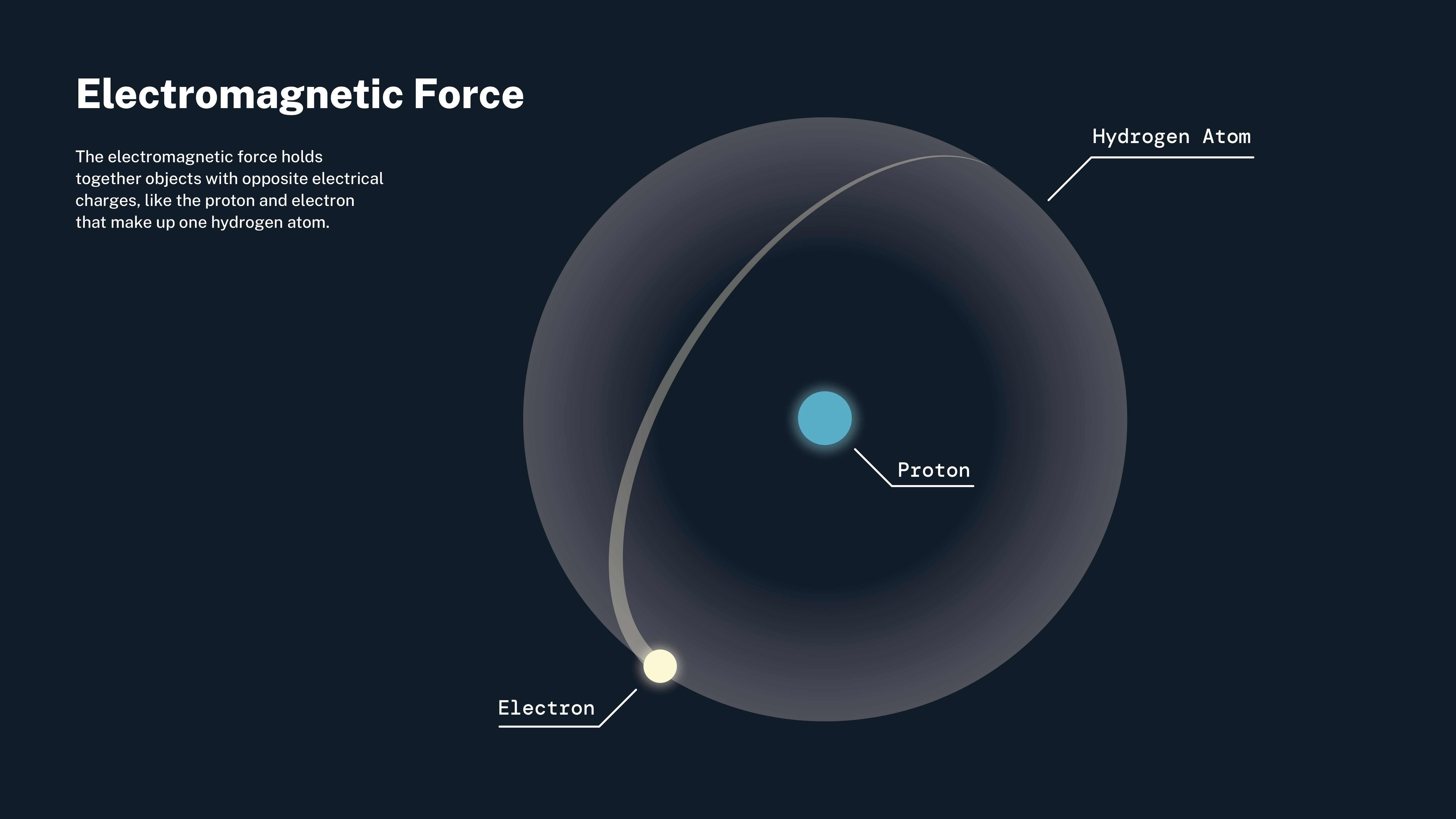
Electromagnetism is the obstacle: like charges repel, raising the Coulomb barrier two protons must get past.
The strong force is the payoff: once nucleons finally touch, it binds them and releases the energy.
The weak force is the bottleneck: it must convert a proton into a neutron in the very first reaction, and it does so rarely — which is exactly why the Sun burns slowly enough to last billions of years.
Quick check
Why does gravity dominate the structure of stars even though it is vastly weaker than the strong and electromagnetic forces in a proton-proton encounter?
Gravity acts between every pair of masses, has infinite range, and never cancels. The strong force is much stronger, but matters only when particles are essentially touching. Electromagnetism also has infinite range, but opposite charges largely cancel on macroscopic scales. So gravity wins globally even though it loses microscopically.