Galaxies as Ecosystems
Section 2 of 9
The Observable Is Diversity
Part 1: The Observable Is Diversity
The first thing to notice is that galaxies are not all the same. Some are blue and clumpy. Some are smooth and yellow-red. Some have grand spiral arms; others look disturbed, stretched, or shredded by interaction. Some are bright in the infrared because dust is being heated by young stars. Some have faint outer halos that are easier to miss than their spectacular centers.
That diversity is not decoration. It is evidence.
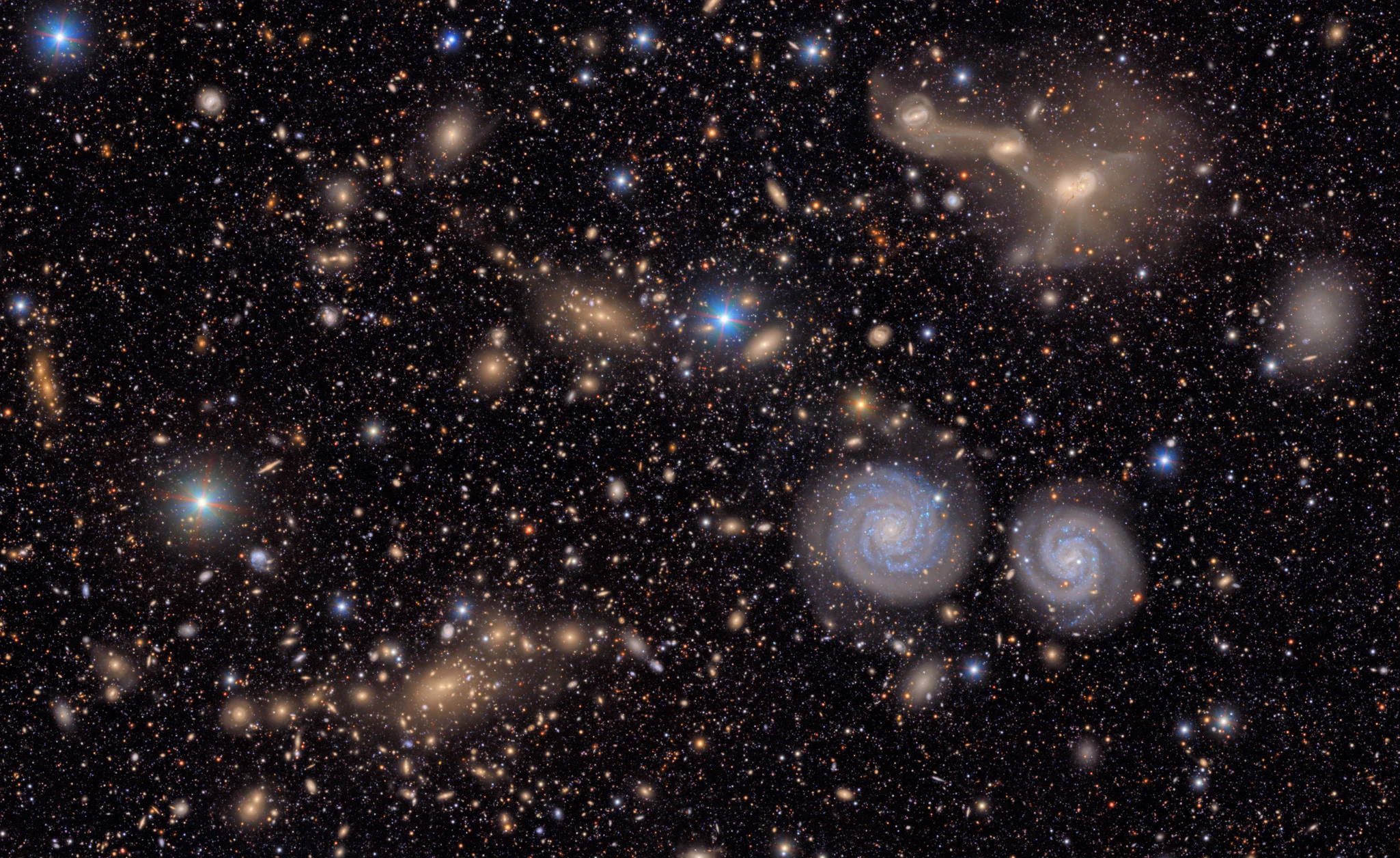
When you look at a deep field, you are seeing many galaxies at once, but not all at the same distance or the same age. Some are nearby enough that their structure is clear. Others are so far away that their light has been traveling for billions of years. In one image, astronomy gives us a mixed archive: different shapes, different colors, different distances, and different moments in cosmic history.
This is where our course throughline matters. If we stopped at observation, we would have only a catalog: spiral, elliptical, irregular, peculiar. Useful, but not enough. To turn the catalog into astrophysics, we need a model for why these differences exist.
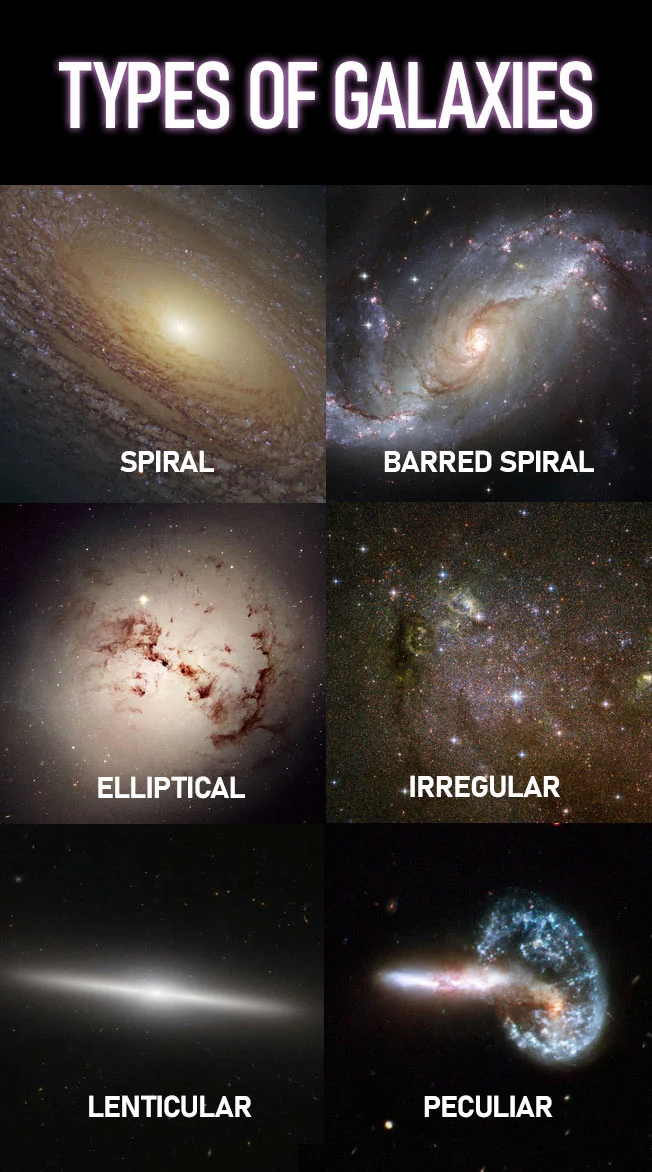
Galaxy morphology
The observed shape or structure of a galaxy, such as spiral, elliptical, irregular, or peculiar. Morphology is a classification of appearance — a starting point for inferring history, not an explanation by itself.
Quick check
Two galaxies have the same total brightness. One is smooth and yellow-red; the other is blue, patchy, and dusty. Which one is more likely to be forming stars right now, and what observable clues support that inference?
The blue, patchy, dusty galaxy is more likely to be actively forming stars. Blue light points to hot, massive, short-lived stars, which means recent star formation. Patchy structure and dust often mark gas-rich regions where stars are forming or have recently formed.