Galaxies as Ecosystems
Section 4 of 9
Multiwavelength Ingredients
Part 3: Different Wavelengths Reveal Different Ingredients
In Module 1, we learned that light is information. Here that idea becomes practical. A galaxy looks different at different wavelengths because different physical components emit, absorb, or scatter different kinds of light.
Radio observations are especially powerful for mapping cold
Neutral hydrogen
Hydrogen atoms that are not ionized. Neutral hydrogen can be mapped using the 21-cm radio line, which passes through dust that blocks visible light — making it one of the most powerful tracers of cold gas in galaxies.
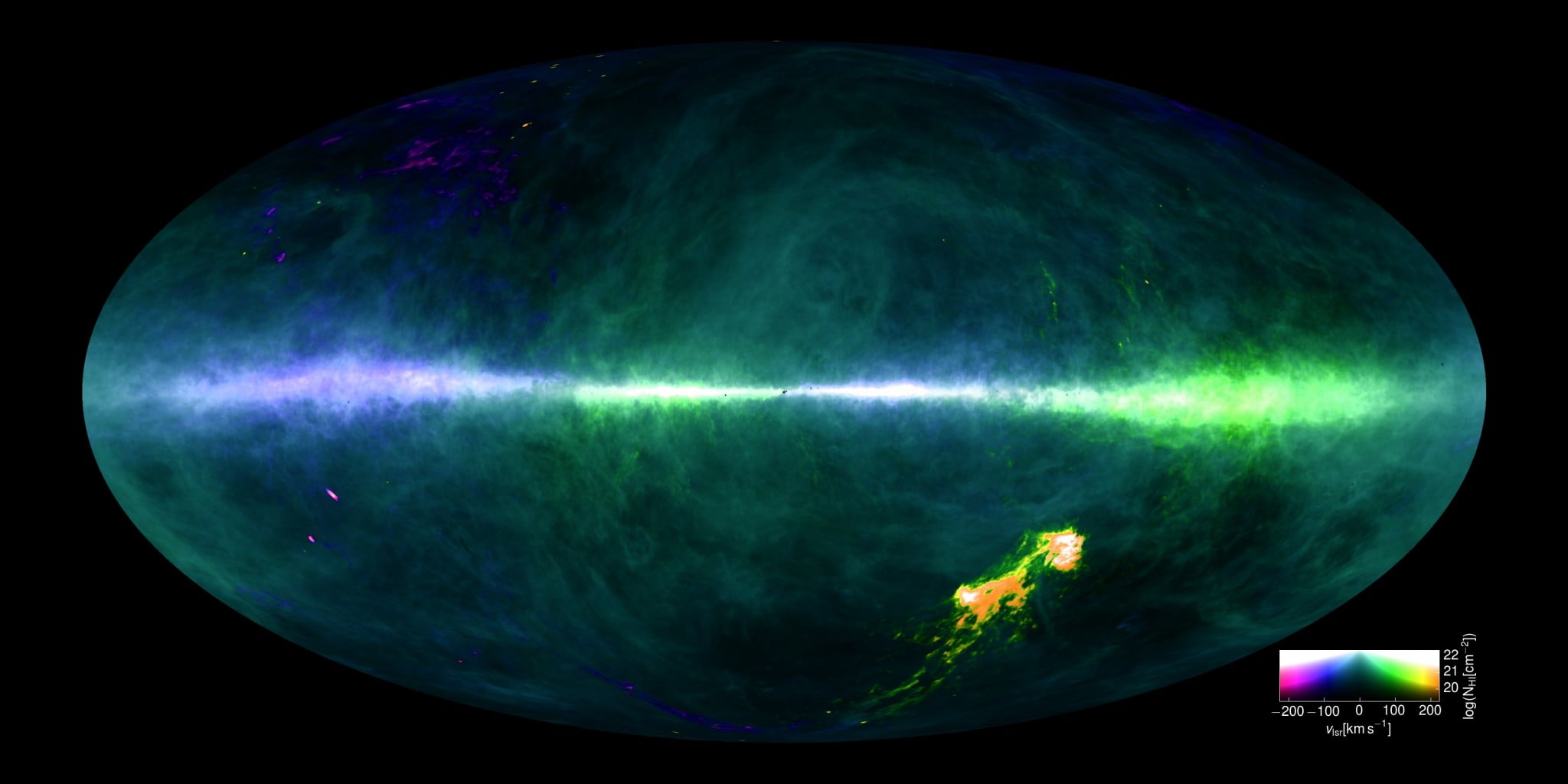
The key inference is not simply “radio sees gas.” The deeper point is that a wavelength can be a physical filter. If you choose the right wavelength, you can isolate a component of the galaxy that would otherwise be hidden. Radio gives one kind of map. Infrared gives another. X-rays give another. Each map is partial; together they become a model.
The Galactic center is the perfect example. In visible light,
Dust
Tiny solid grains in interstellar space that absorb, scatter, and re-emit light. Dust is especially important for interpreting optical and infrared observations: it hides starlight in the visible but glows in the infrared when heated.
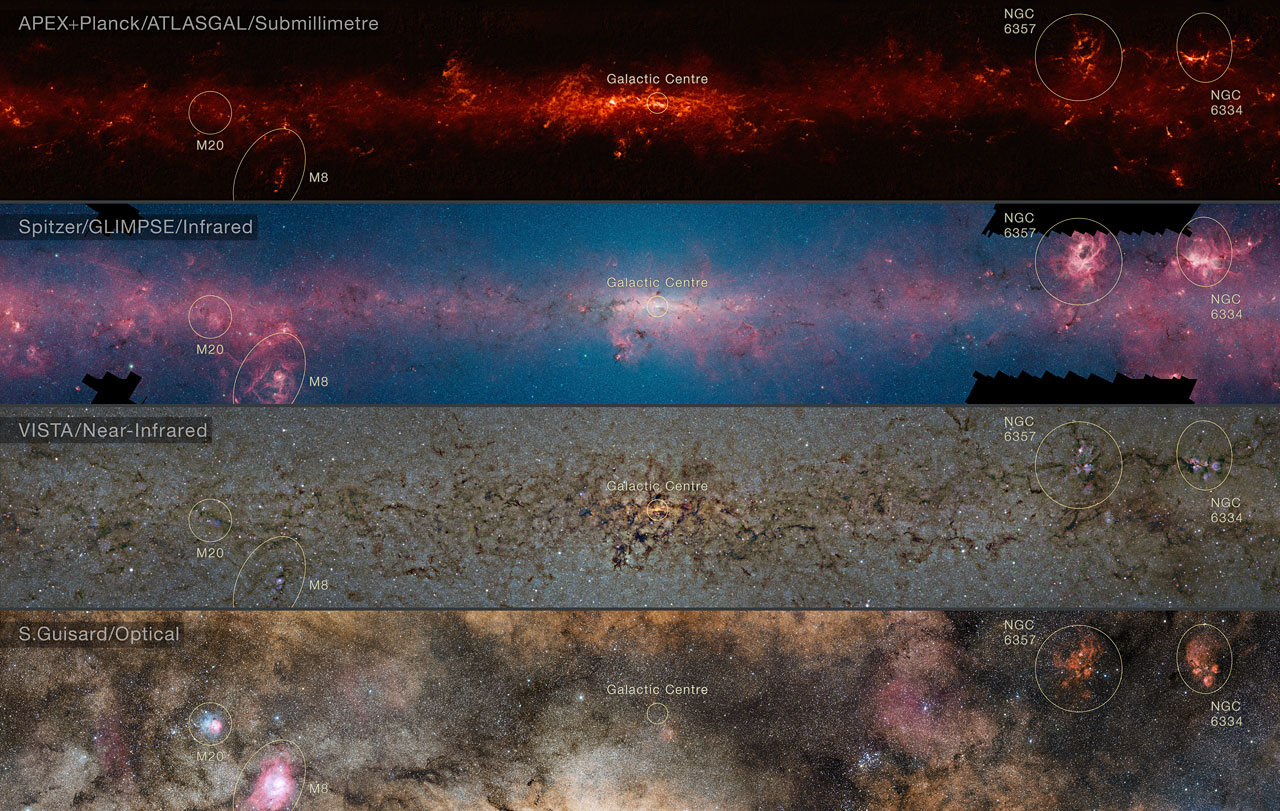
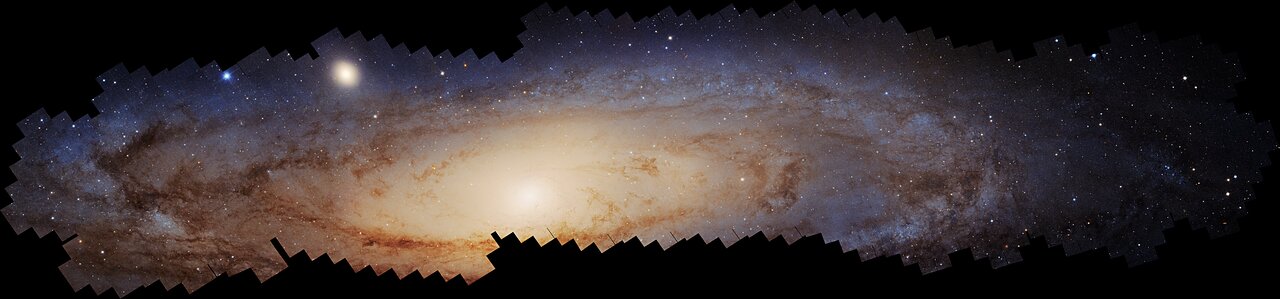
Nearby galaxies let us connect the inside-out Milky Way view to a more external perspective. Andromeda is close enough that we can study structure across its disk, but far enough that we can see the disk as a galaxy. It is a bridge between “our galaxy from the inside” and “galaxies as a population.”
Quick check
Why is a radio map of neutral hydrogen not just a lower-resolution version of an optical image?
Because it is mapping a different physical component. Optical light is mostly starlight plus emission or absorption from gas and dust. A 21-cm radio map traces neutral hydrogen gas directly, including gas hidden behind dust or extending beyond the bright stellar disk.