Galaxies as Ecosystems
Section 6 of 9
Interactions Rearrange the Fuel
Part 5: Interactions Rearrange the Fuel
Galaxies are not isolated islands. They tug on one another through gravity. When galaxies pass near each other or merge, their stars mostly pass by without colliding because stars are tiny compared with the spaces between them. Gas behaves differently. Gas can shock, compress, cool, and flow. That makes interactions especially important for star formation.
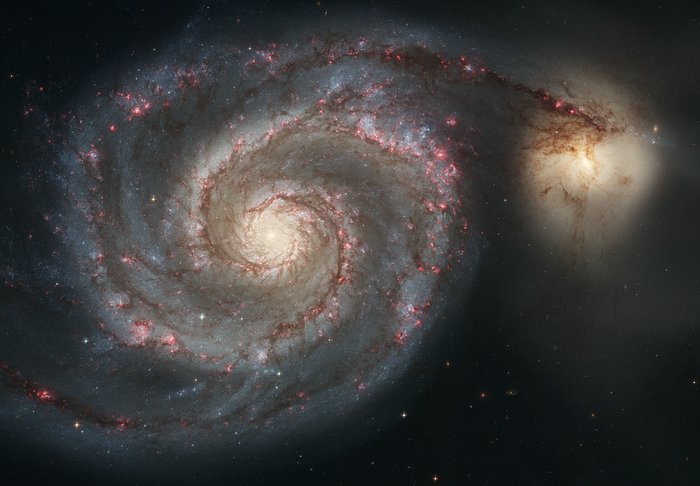
The Whirlpool Galaxy shows this idea in a form you can see. Its spiral pattern is not just a pretty shape. The companion galaxy is part of the gravitational story.
Tidal interaction
Gravitational distortion caused by a close passage or merger between galaxies. Tides stretch and pull material into streams and tails, reshape disks, and compress gas — rearranging where future star formation can happen.
The Antennae galaxies show a more dramatic case. Two galaxies in the middle of a merger contain enormous reservoirs of gas and dust. Where gas is compressed, star formation can surge. This is why mergers can produce
Starburst
A short-lived episode in which a galaxy forms stars much faster than its long-term average rate, often triggered when an interaction or merger compresses large reservoirs of gas.
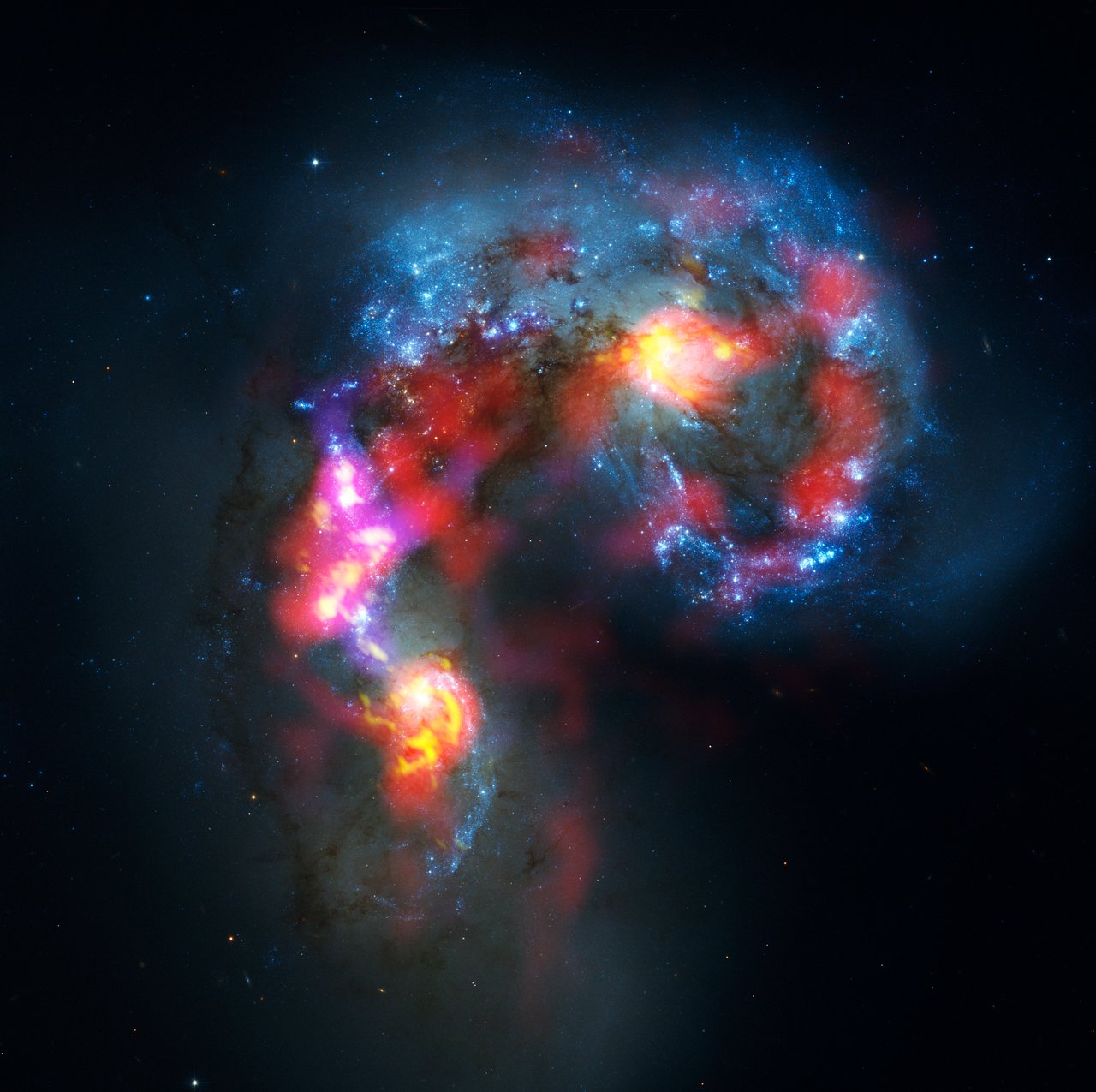
Multiwavelength observations matter here because stars and gas do not always occupy the same places. A visible-light image emphasizes stars and dust lanes. Millimeter and radio observations can trace molecular gas — the dense cold material out of which stars form. If we want to know where future stars may form, we need to find the fuel, not just the stars that already exist.
Quick check
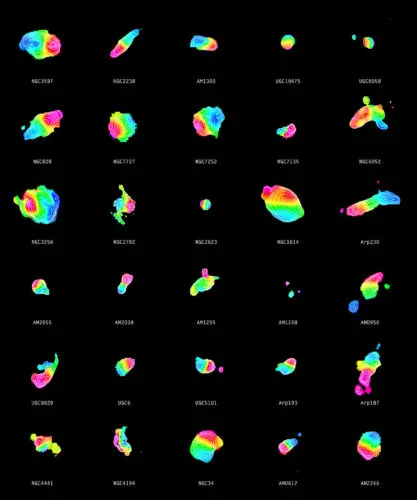
Why can a galaxy interaction trigger star formation even though individual stars almost never collide?
Because the gas is extended and collisional in a way stars are not. During an interaction, gravity can compress gas, drive gas flows, and create shocks. Dense compressed gas is more likely to cool and collapse into stars.