Galaxies as Ecosystems
Section 7 of 9
Feedback and Self-Regulation
Part 6: Feedback Makes the Ecosystem Self-Regulating
Star formation does not simply continue forever once it begins. Young massive stars produce ultraviolet radiation, powerful winds, and supernova explosions. These processes inject energy and momentum into surrounding gas. Sometimes that
Feedback
Energy and momentum returned to surrounding gas by stars, supernovae, stellar winds, radiation, or accreting black holes. Feedback can both trigger star formation (by compressing gas) and suppress it (by heating or expelling gas) — which is what makes a galaxy self-regulating.
M82 is a vivid example of feedback on galaxy scales. Its central starburst drives material out of the disk in a wind. That outflow carries gas, dust, and heavy elements away from the regions where they formed.
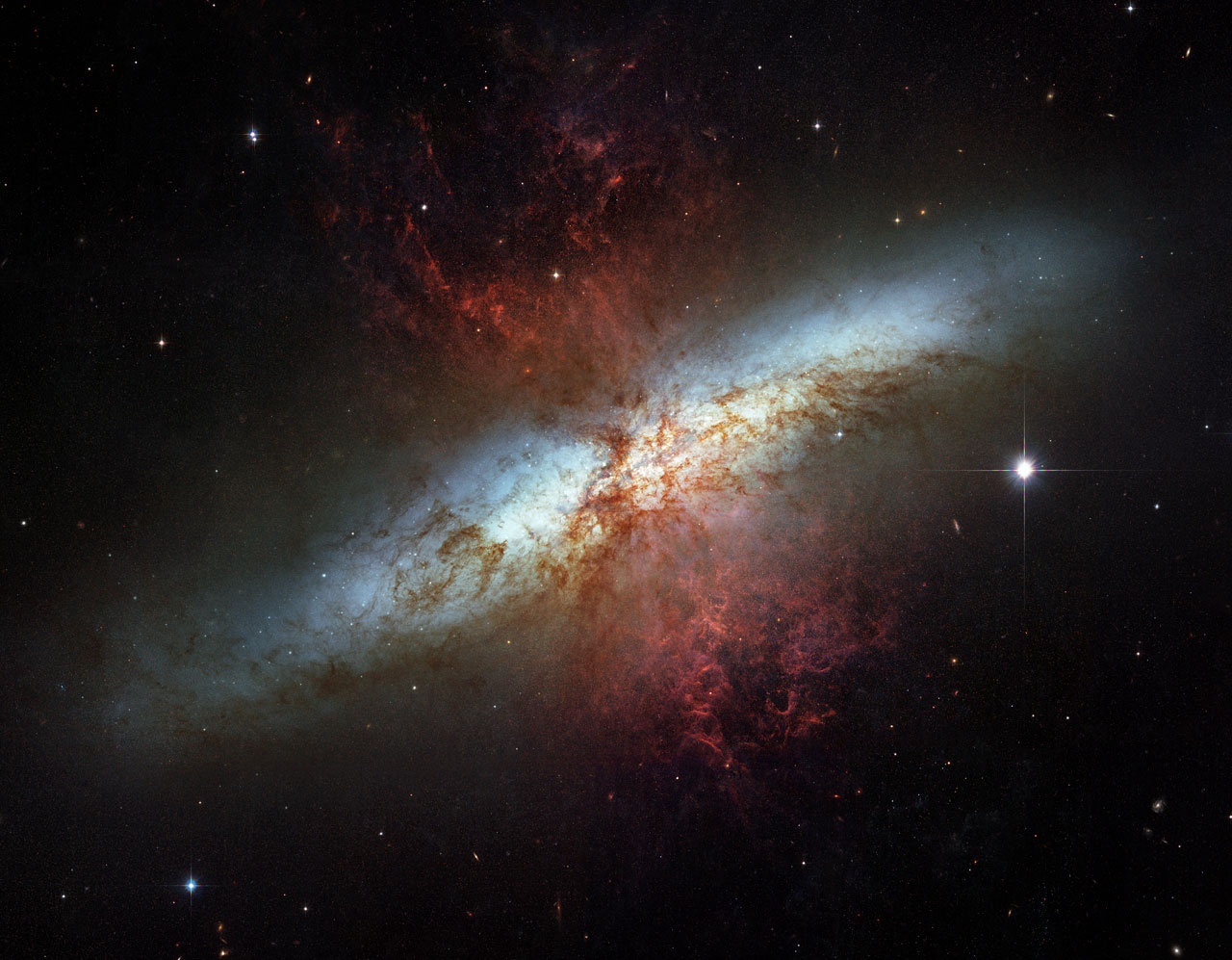
This is the moment where the ecosystem metaphor earns its keep. A forest is not just trees. It includes soil, water, climate, fire, decay, and regrowth. A galaxy is not just stars. It includes gas reservoirs, dust, radiation fields, gravity, shocks, outflows, accretion, and recycling. Feedback is one of the processes that keeps the system from being a one-way collapse of gas into stars.
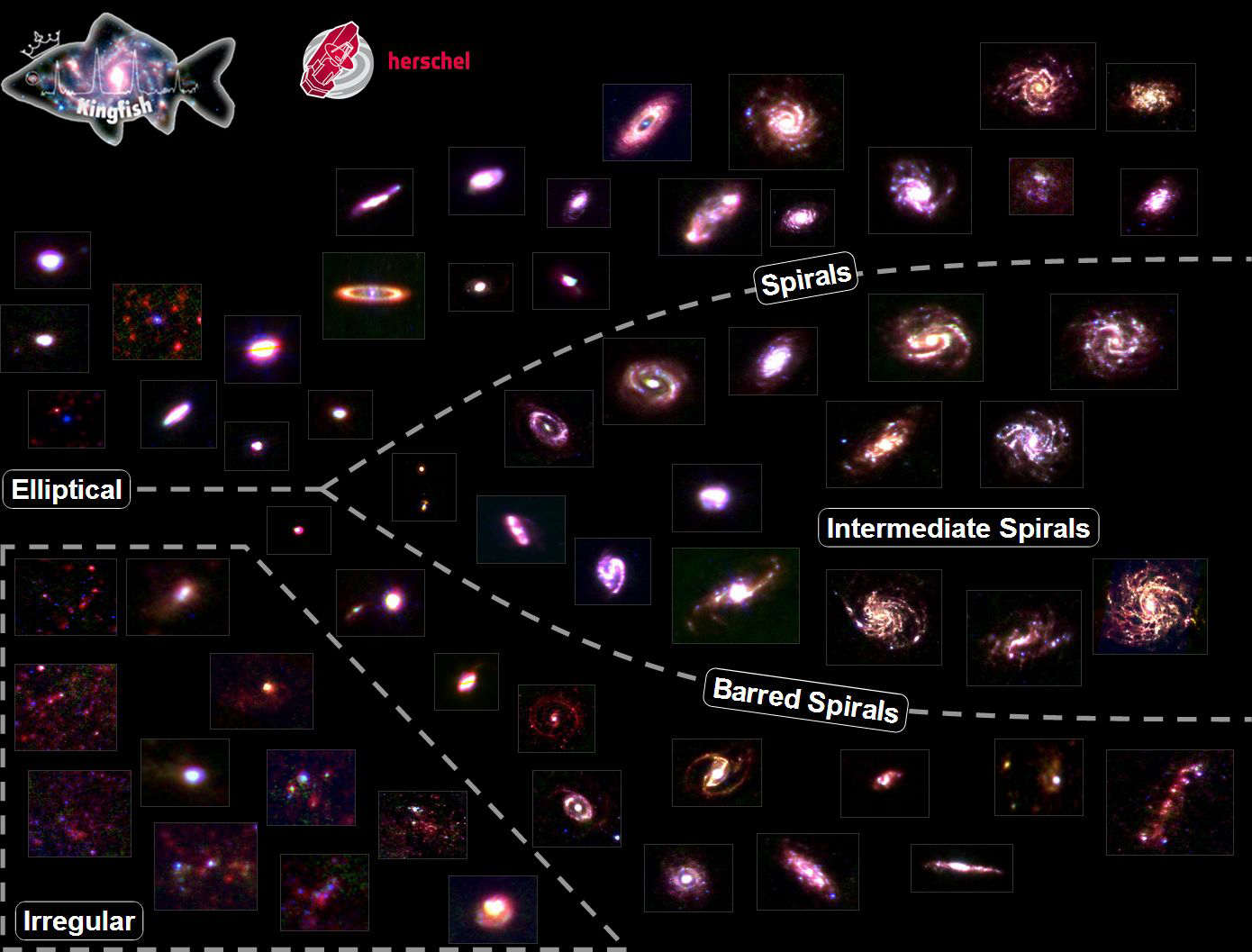
The classification schemes we use for galaxies are therefore only the first layer of explanation. A tuning fork diagram can help us describe what we see, but a galaxy’s physical story requires us to ask about gas supply, stellar populations, environment, and history.
Quick check
Why is feedback not simply “stars stopping star formation”?
Feedback can suppress star formation by heating or expelling gas, but it can also compress nearby gas and help trigger collapse. The effect depends on the local environment, timing, and how much gas is available.